Main Content
Roses are among the most popular flowers in the garden. With proper care, roses can reward gardeners with beautiful blooms beginning in late spring throughout the summer in New Jersey. Some best practices for caring for roses during the hot, humid summer months follow.
Deadheading
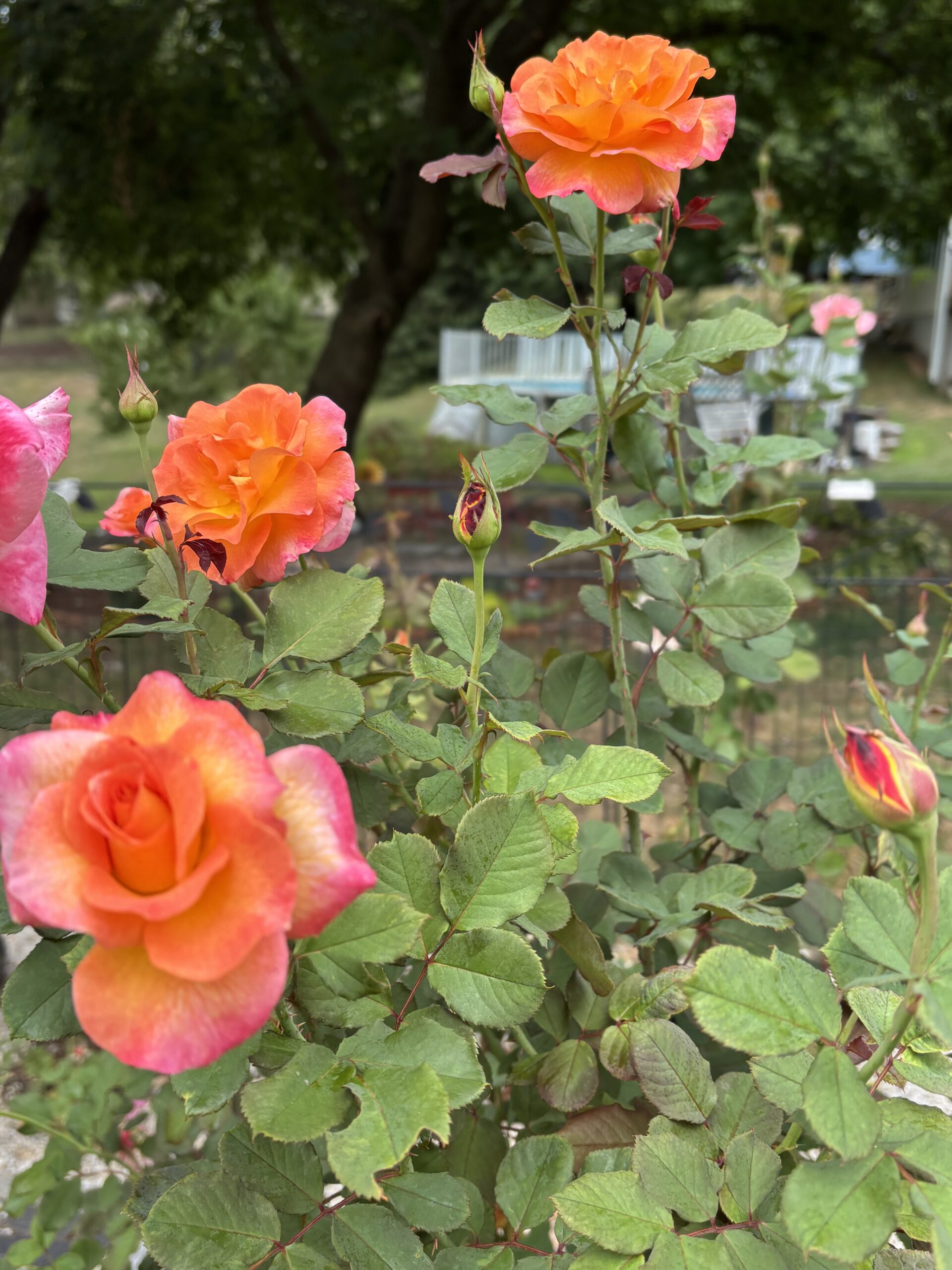
For roses that bloom repeatedly during the season, deadheading or removing all faded flowers throughout the summer fosters additional blooms and improves the plant’s overall appearance. To deadhead established roses, use clean pruning shears to cut back the stem of the flower to a 5-leaflet leaf, retaining at least two 5-leaflet leaves on each shoot. Stop deadheading in late summer to slow plant growth and help it prepare for winter. Roses that bloom only once yearly do not require deadheading.
Watering
Roses require thorough deep watering when the top 1 to 2 inches of soil is dry. Water slowly to ensure it penetrates the soil deeply. If possible, water directly to the soil around each plant using a soaker hose. Avoid light surface watering and overhead sprinkling. Wetting the foliage promotes the spread of diseases such as black spot. If overhead watering is unavoidable, water in the morning to allow foliage to dry by evening.
Mulching
A layer of organic mulch placed around the bed of roses or over individual plants will help control weeds and keep the roots of the plants cool. The soil around the roses will remain moist longer, potentially reducing the frequency of waterings.
Fertilizing
Fertilize roses after pruning in early spring. Use a fertilizer that is suitable for roses and apply as per the product label directions. Fertilize repeat-blooming roses several times a year to promote growth and plentiful flowers. Other types of roses do not need additional fertilizer applications.
Seasonal Pruning
Roses typically require a through pruning in the spring. As the season progresses, it is important to monitor roses and perform seasonal pruning as needed to:
- Remove dead wood and diseased/injured wood
- Remove crossing branches
- Remove suckers (shoots that appear from the rootstock below the bud union of the plant)
The warm humid summer weather is ideal for the spread of diseases. Pruning to ensure there is good airflow around roses helps discourage the spread of diseases.
Credit: Christine H., Rutgers Master Gardener of Hunterdon County