Main Content
By Toni B., Rutgers Master Gardener of Hunterdon County
Native plants have evolved to grow best in their historic regions and are the foundation of many food webs as hosts for insects. They grow in their habitat without human aid while providing food and shelter to insects, pollinators, birds, and other native wildlife. These plants often have deep roots that require less watering, they sequester carbon, and they are less prone to disease and pest problems. Native plants historically provide greater diversity. However, the overpopulation of deer feeding on natives imperils their growth. In contrast, invasive plants from other regions grow out of control due to the lack of natural disease control and predators, including deer. Simply, invasive plants outcompete native plants and limit diversity necessary to support the food web.
Residential and industrial development destroys habitat for native plants, which is often replaced with “cookie cutter” landscaping. Conservation land and park lands alone are not large or common enough to sustain widespread native plant populations so home landscaping with native plantings helps to connect native plant habitats.
In planning your garden, identify plants to remove (especially invasive plants) and native plants to keep. Use of a plant identification app or reference book is often helpful. Also, be sure to check on sun requirements, size of the adult plant, and growing information, including deer resistance.
Following are some suggested deer resistant native groundcovers, some of which grow to 6 inches along with others that may reach several feet in height and width. Keeping leaf litter around them protects native plants by regulating moisture and supplying nutrients.
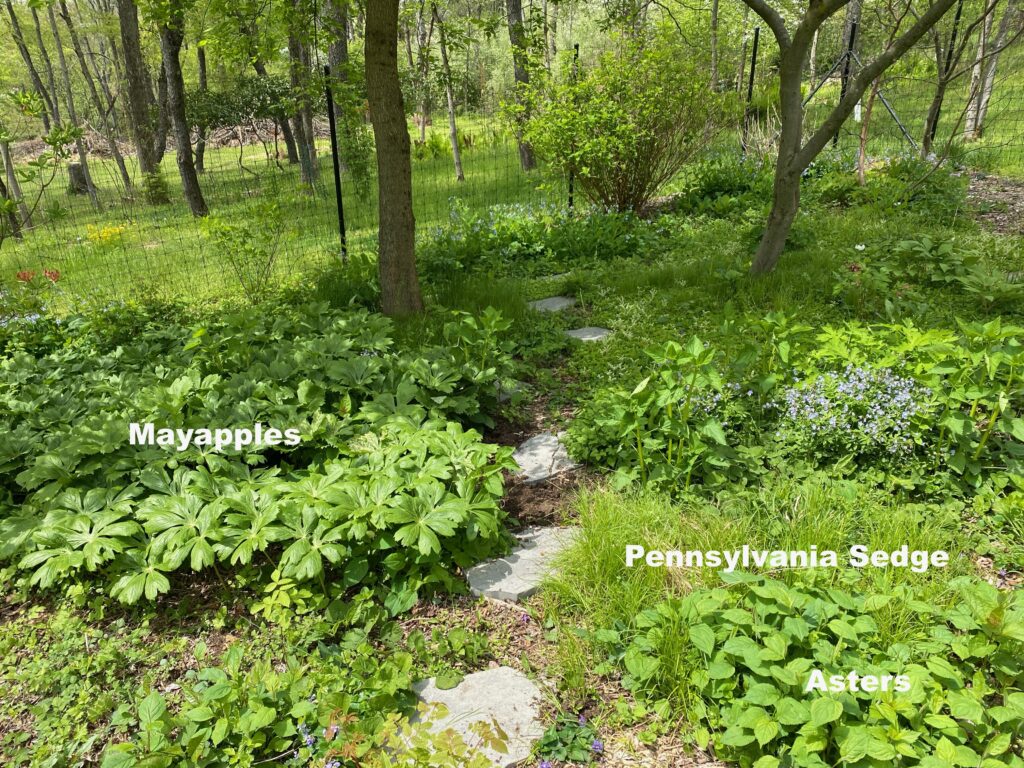
• Mayapple (Podophyllum peltatum) that grows to 1-2 feet in part to full shade
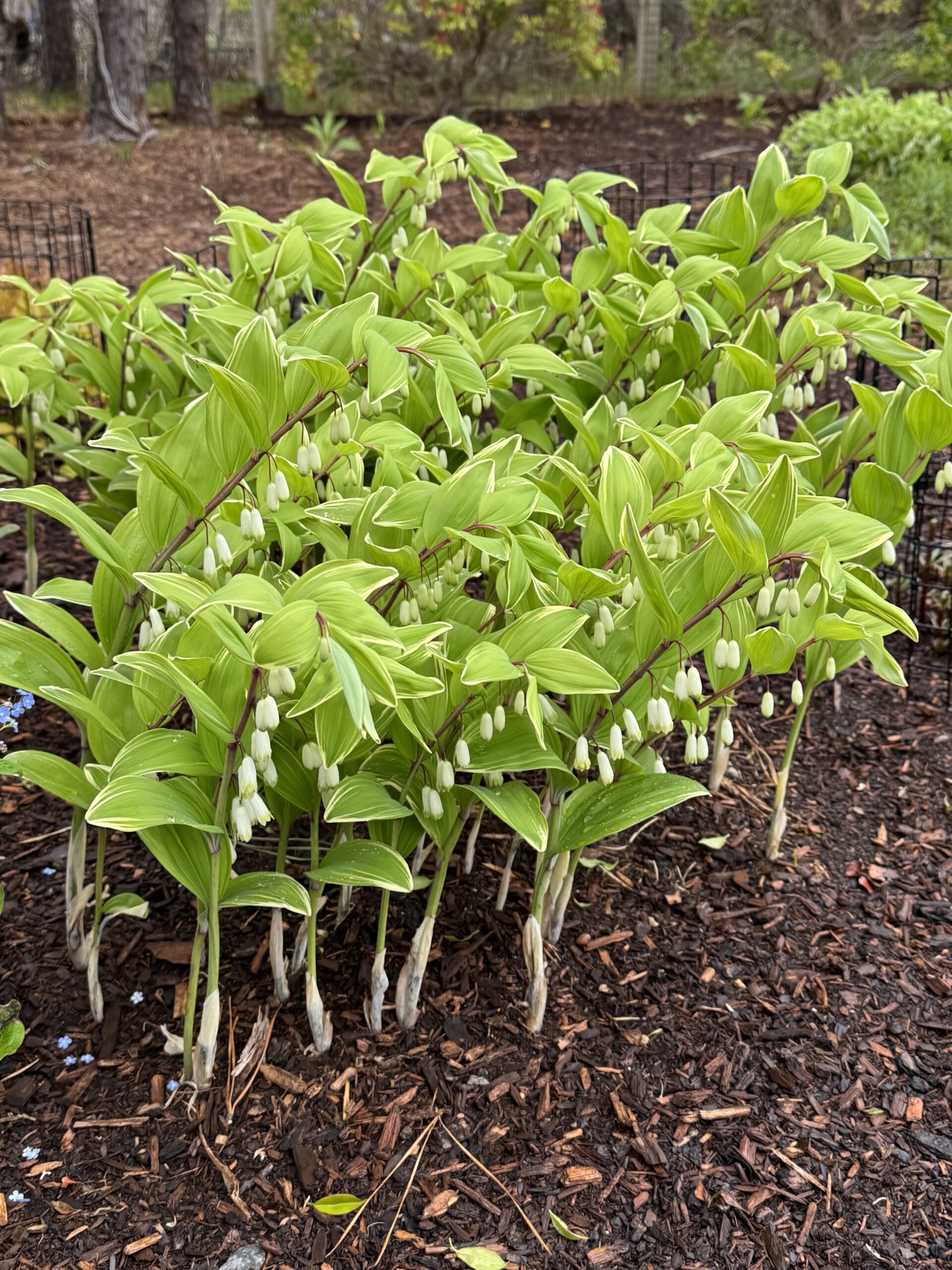
• Giant Solomon’s seal (Polygonatum var. commutatum) grows to 2-4 feet in part to full shade.
• Common blue violet (Viola sororia) requires part sun to part shade.
Following are some suggested native ferns which need at least some shade and have evolved to have a moderate to high deer resistance.
• Northern maidenhair fern (Adiantum pedatum) 1-3 feet
• Marginal woodfern (Dryopteris marginalis) 1-3 feet
• Lady fern (Athyrium filix-femina) 1-3 feet
• Royal fern (Osmunda regalalis) 4-5 feet
• Christmas fern (Polystichum acrostitchoides) 1-2 feet
• cinnamon fern (Osmundastrum cinnamomeum) 2-4 feet.
Other native groundcovers that need more sun or part shade and have some deer resistance:
• Bearberry (Arctostaphylos uva-ursi) full sun to light shade, 6-12 inches, evergreen with red berries
• Creeping sedge (Carex laxiculmis) part sun to part shade, clumping, compact groundcover or may be used as a lawn alternative
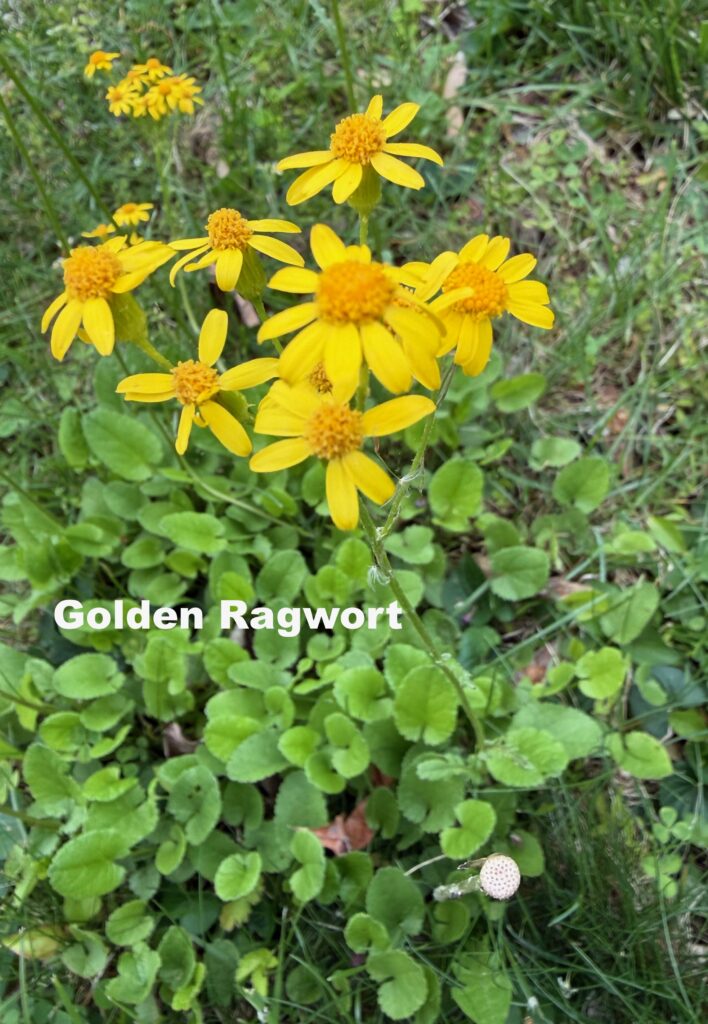
• Golden ragwort (Packera aurea) full sun to shade, 6-24 inches, evergreen, yellow flowers in spring, deer resistant
• Pennsylvania sedge (Carex pennsylvanica) full sun to shade, 6-12 inches, clumping, grass-like sedge, groundcover or lawn alternative, deer resistance
• Wild ginger (Asarum canadense) part sun to shade, 6-12 inches, brown-purple spring flowers hidden by leaves, spreads by rhizomes
• Butterfly milkweed (Asclepias tuberosa) full sun, 1-3 feet
• Moss phlox (Phlox subulate) full sun, 6-12 inches
• Bluestem goldenrod (Solidago caesia) part sun to shade, 1-3 feet
The following deer resistant native designations have many plants that evolved to attract birds, bees, butterflies, and other insects. Their flowers vary in color, size, and smell giving the gardener wide selections for the garden.
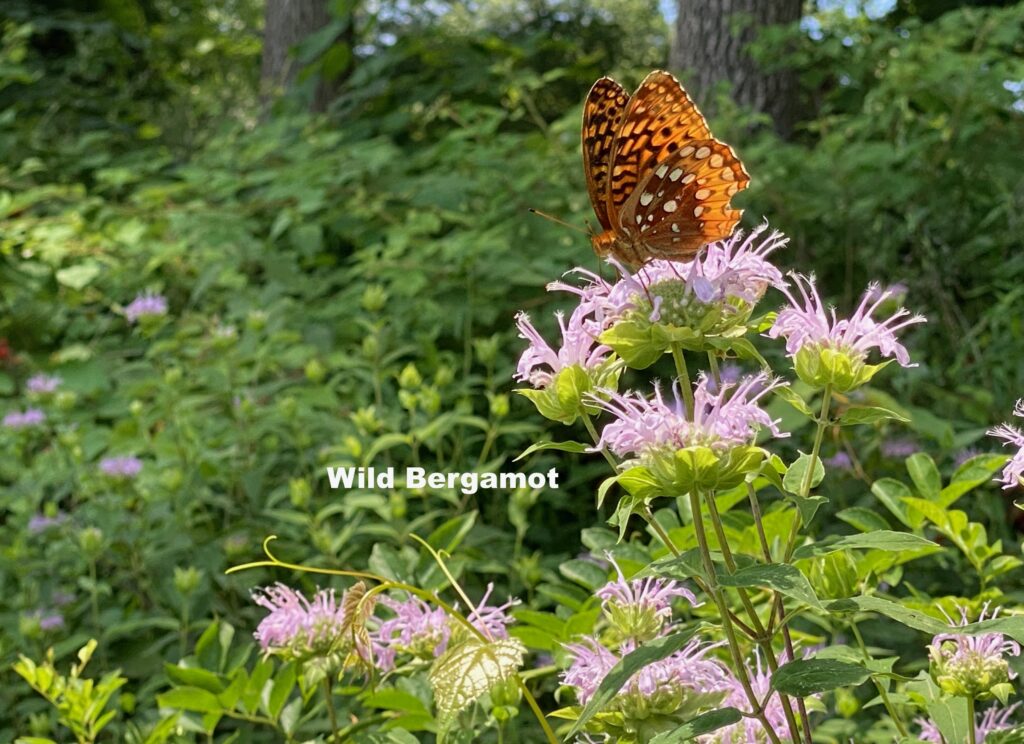
• Bee balm (Monarda genus)
• Columbine (Aquilegia genus)
• Asters (Asteraceae family)
• Coneflowers (Echinacea genus)
Native groundcovers and flower species can enhance the landscape while supporting pollinators and wildlife.
Much more information can be found at the following websites:
https://njaes.rutgers.edu/fs1140
https://midatlantic.invasive.org/plants.cfm